Shrine Path Guided Walk
A calm ninety-minute walk along a historic shrine approach, pausing at the torii gates, purification fountain, and main hall with context and etiquette offered along the way. ¥4,800
Learn more →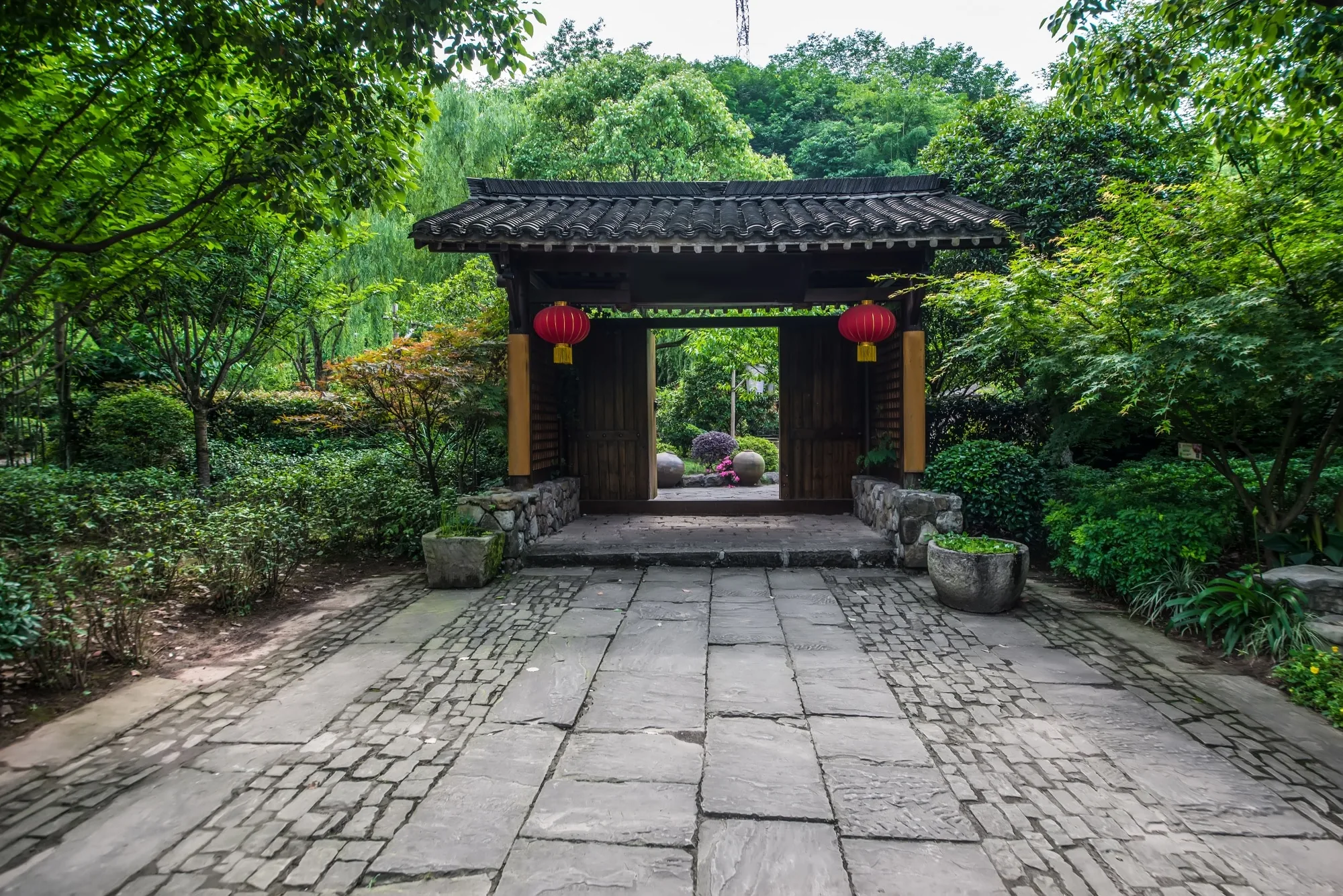
Sacred Forest Morning · 2 hours
An early walk into the wooded grounds of a Kyoto shrine, when the air is cool and the paths belong to almost no one. A guide walks with you through the trees and helps you understand why this forest exists and what it holds.
← Back to Horizon Forge PanelWhat this morning offers
There is a particular stillness in a sacred forest at dawn that is unlike anything you encounter in the rest of the day. The light comes through the canopy in long angles. The sound changes. The weight of the trees around you is felt differently when you understand what they represent in Shinto thought.
This walk gives you that experience and the understanding to go with it. You will leave with a clearer sense of why forests have been preserved around shrines for over a thousand years — and what it means to walk inside one with care.
Early hours when the grounds are nearly empty and the atmosphere holds
Why the forest is sacred, what the trees carry, and how to move within them
A moment of guided reflection within the forest itself, without agenda
A familiar tension
Most visitors to shrine grounds pass through the forested paths on the way to the main hall. The trees are beautiful and the shade is welcome. But the forest itself — its purpose, its history, the small rituals woven into it — often goes unnoticed, because there is nothing to draw the eye to it.
This is not carelessness. Sacred forests in Japan do not announce themselves. Their significance is embedded in the way the land has been managed across centuries, in the names of the trees, in the deliberate absence of certain things. Without a guide, what feels like a pleasant walk through old trees remains exactly that.
This walk is for people who sense that something more is present and want to find it.
The approach
The Sacred Forest Morning focuses on the wooded grounds surrounding the shrine itself — the chinju no mori, the forest kept to protect and consecrate the sacred place within. Your guide moves through this space with you at an unhurried pace, drawing attention to the trees, the paths, the small markers that most visitors walk past without pausing.
The guide shares the Shinto understanding of nature not as scenery but as something inhabited and alive — and how that belief has shaped the way these forests have been tended and preserved. Seasonal observations are woven in naturally: what the forest looks like at this time of year, what has changed recently, what is worth noticing today specifically.
The walk ends with a seated pause somewhere within the forest. Nothing is required of you there. It is simply a moment to be still in the place you have just learned to see differently.
How the morning unfolds
Your guide meets you at the outer boundary of the shrine grounds, before you enter the forest proper. A brief orientation sets the tone for the morning — unhurried, attentive, without expectations.
The walk moves deeper into the wooded grounds, pausing at points where the forest reveals something worth attending to — a particular tree, a boundary stone, a clearing where the light falls differently. The guide explains what each holds in the context of Shinto thought.
Several small practices are embedded in the forest path — how to acknowledge certain trees, what particular placements of stone mean, how the path itself communicates the relationship between the human and the sacred. These are shared naturally, as part of the walk rather than as instruction.
The walk closes at a chosen spot within the forest — somewhere with the right quality of stillness. Your guide invites you to sit quietly for a few minutes. There are no instructions for how to use the time. The forest does the rest.
The investment
Shrine entrance fees where applicable, transport to the meeting point, and any personal items are not included.
What this walk rests on
These forest paths have been walked by the same guides through spring mist, summer heat, autumn colour, and winter quiet. What they offer changes with the season and the guide knows what to look for each time.
The morning start time is chosen carefully. By the time most visitors arrive, the walk is already finished. The forest you experience is one that has not yet been touched by the day's activity.
What the guide shares about the forest is grounded in genuine study of Shinto belief and practice — not a surface-level description, but an account that connects the trees to something larger.
Arriving with ease
Comfortable shoes and clothes suited to an early morning outdoors are all you need to bring. No reading, no background knowledge, no special equipment. Your guide will provide everything else through the walk itself.
Write to us after the walk and describe what was missing. We take that kind of feedback seriously and will do our best to respond to it properly — either with an explanation or with an offer to make it right.
How to arrange it
Use the contact form and let us know when you would like to come and roughly how many people will be joining. Early mornings in May through November tend to book ahead, so reaching out a week or two before helps.
We reply within a day or two with the exact meeting point, the start time, and a few notes about what to wear and bring. The process is simple and there is no obligation until you confirm.
Your guide will be at the meeting point. The walk begins from there, gently and without rush. Whatever the weather, the forest has something worth attending to.
Sacred Forest Morning
Send a message with your preferred date and we will arrange the details. A calm two hours in the woods of Kyoto, before the day has fully begun.
Arrange this morningOther walks
A calm ninety-minute walk along a historic shrine approach, pausing at the torii gates, purification fountain, and main hall with context and etiquette offered along the way. ¥4,800
Learn more →A full-day journey linking several sacred places along a traditional route, with a simple seasonal lunch and a printed route note to keep. ¥19,800
Learn more →